

Planning approval granted for RAF Ibsley Watch Office
New Forest District Council has approved Landmark’s planning application for vital repair works to rescue the former RAF Watch Office (later known as a Control Tower) at Ibsley from its current state of near dereliction.
Natural England’s decision to withdraw their objection following extensive ecology reviews has now paved the way for planning approval and for work to start on site at Ibsley later this year. This is a real milestone for the Landmark Trust and a demonstration of how close working with all parties can enable historical rescue and restoration in a way that is wholly respectful of significant ecological and environmental constraint.
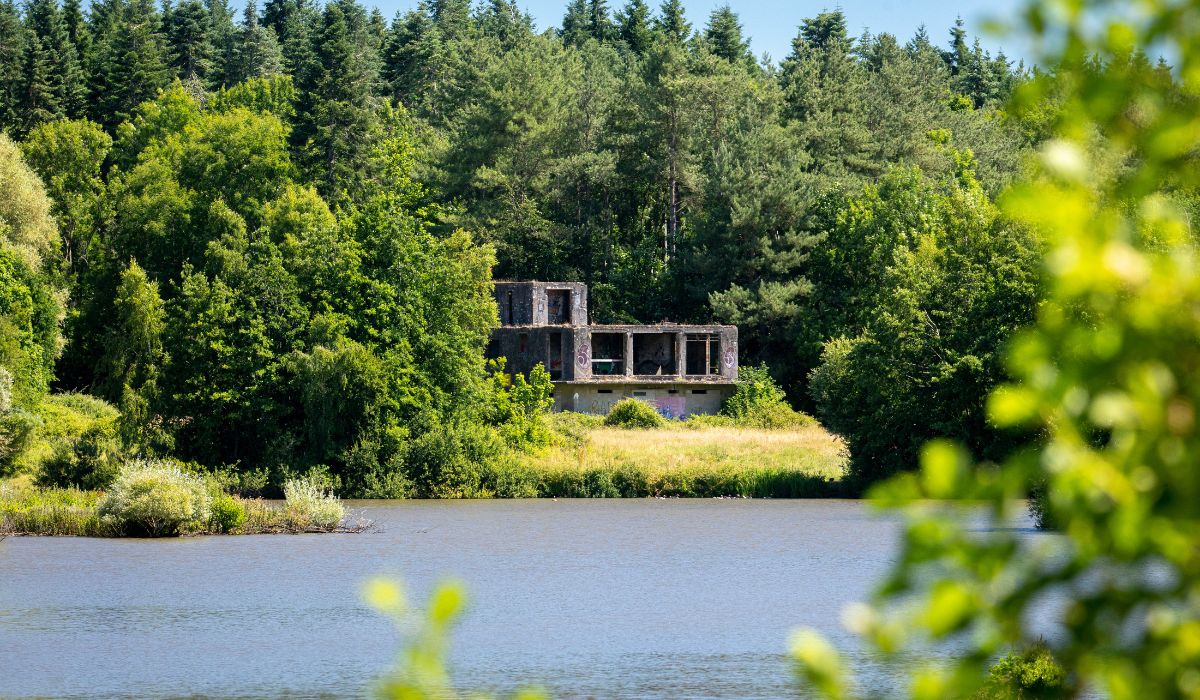
RAF Ibsley Watch Tower as it is today
The former airfield at Ibsley sits within one of the UK’s most important natural habitats - the Avon Valley Special Protection Area (SPA) and Avon Valley Ramsar site - meaning the surrounding wetlands are of international ecological importance as a habitat for waterfowl and other wildlife. The area is also designated as a Site of Special Scientific Interest (SSSI) and is governed by strict environmental protections as part of the New Forest National Park. Several species of bats use the building, and their roosts need to be protected as well as the flight route between the Watch Office and the adjacent woodland.
Landmark has worked with a team of specialist ecologists to gather data on the variety of species in and around the Watch Office – from plants and invertebrates to bats and wintering birds such as the Bewick’s swan and gadwall. This evidence has been key in building understanding of the complex ecology of the site and its wider setting, and developing robust proposals for how any potential harm will be avoided. Bat habitats and flights will be carefully managed in dedicated spaces with compensatory roosts, guided by independent expert ecologists and informed by Landmark’s award-winning experience in managing bat habitations.
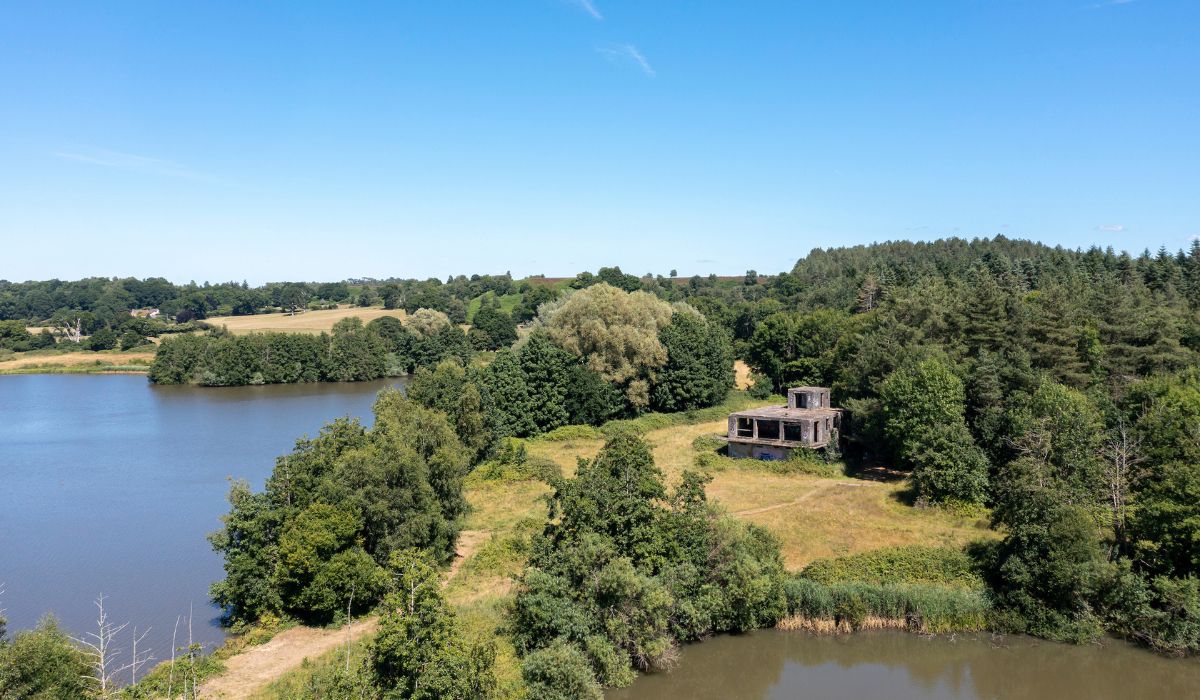
The former airfield sits within one of the UK’s most important natural habitats
A significant wartime monument to human courage
Between 1941 and 1944 Ibsley saw active service for both the Royal Air Force and United States Army Air Force. From its runways airmen flew out into hostile skies to defend Britain with great courage and at huge personal cost, many never to return. It was here that Leslie Howard and David Niven made the seminal war film The First of the Few. Today the Watch Office is a unique survivor of its 518/40 design, which included innovative use of structural concrete, and in its retention – just – of a slender concrete viewing balcony. Yet the large Crittall windows have long rusted and fallen in and the ceilings are now rapidly collapsing, transforming the site into a patchwork of risks.
For years, the building has stood locked and unsafe on a private estate, with no public access at all. Energetic local efforts to save the building had come to nothing, and the intervention of the Landmark Trust was the Watch Office’s only hope of being saved.
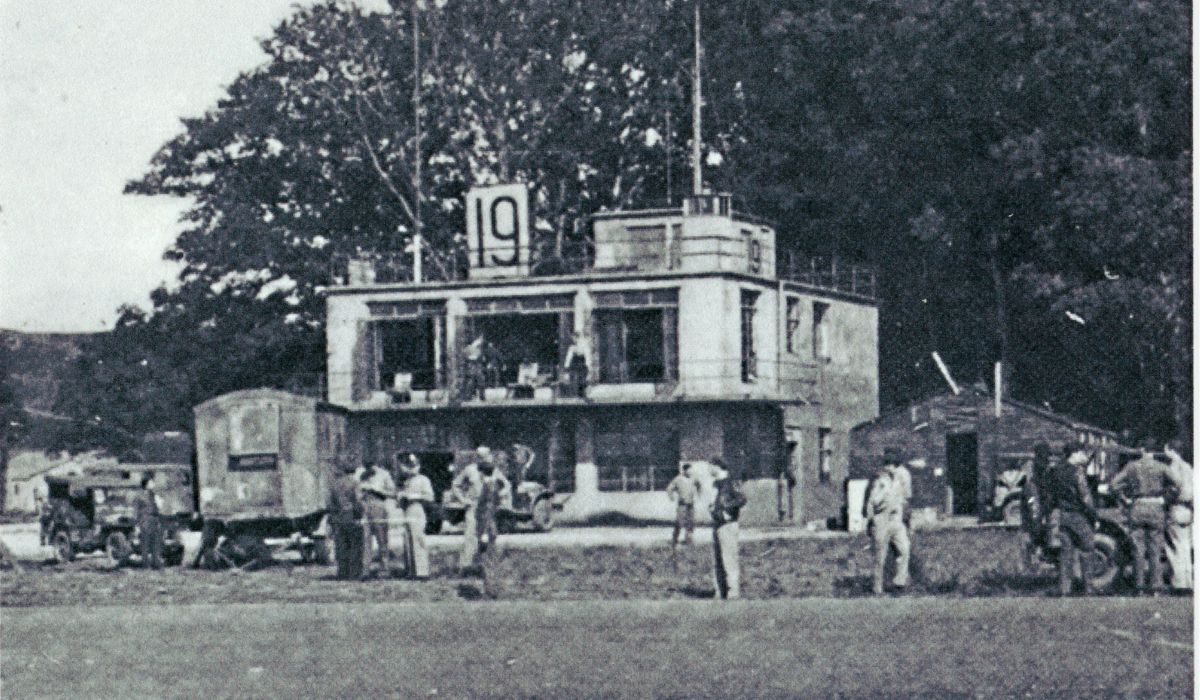
RAF Ibsley Watch Office in July 1944, in use by the 9th Army Air Forces USAAF, 367th Fighter Group. Photo supplied by RAF Ibsley Airfield Heritage Trust
A hopeful new future for this significant site
Thanks to the generosity of many supporters, Landmark’s restoration will see the Watch Office sensitively adapted for up to eight holidaying guests. The income will pay for its future maintenance, so preserving the building and the memories it holds for future generations. The restored building will combine accessibility with environmental sustainability. The 1940s layout and wartime decorative schemes will be respected. Special events, offering free public access, will be offered, alongside online interpretation, to share the story of the Watch Office and its history.
We continue to fundraise towards the restoration of this fragment of wartime history. Read more about our plans below, and find out how to support our appeal.


